

Painting a Path to Independence
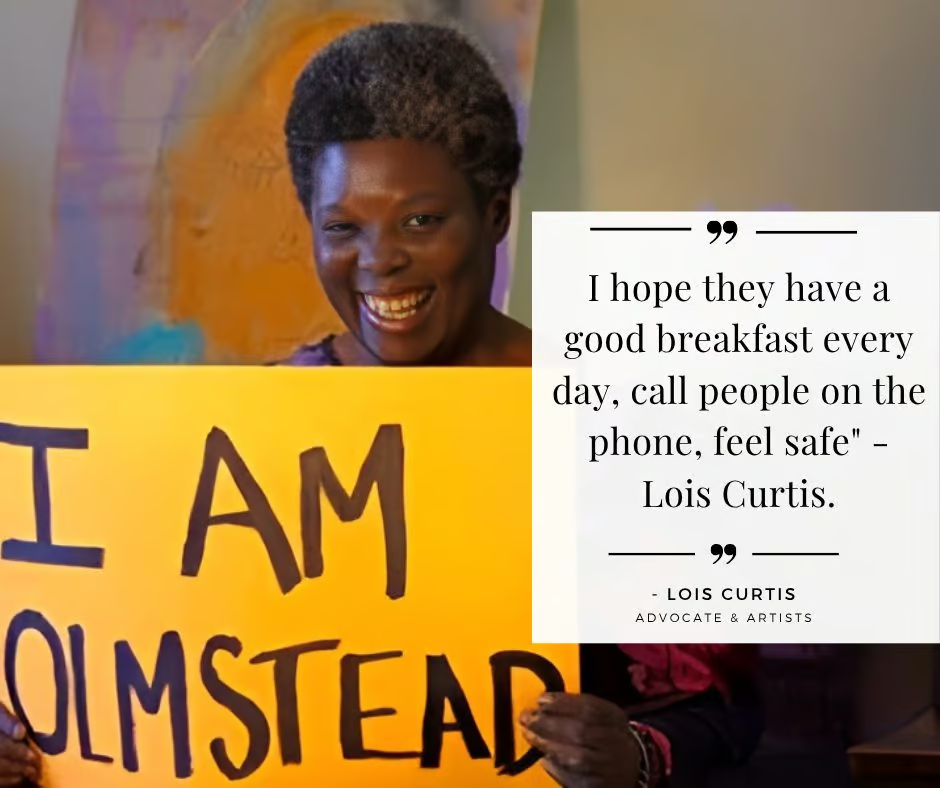
Lois Curtis wanted what many people desire: a home, a community, and the freedom to live life on her own terms. She was a celebrated artist whose work traveled across the country, and her advocacy played a significant role in transforming disability rights in America. Yet before her art reached national audiences and before she became a personal guest of President Barack Obama, Curtis spent much of her early life in institutions where her voice and choices were often ignored.
Curtis was placed in Georgia Regional Hospital as a child and spent years moving in and out of institutional settings. Her disabilities were misunderstood, and the support she needed to live in the community was not provided. Still, Curtis continued to express a strong desire for independence and to assert her right to live in the community despite years of institutional barriers. She wanted to make her own choices, create art, participate in her community, and enjoy the everyday routines that many take for granted.
With support from the Atlanta Legal Aid Society, Curtis challenged the State of Georgia after professionals determined she could live in a community-based setting with proper services. Lois fought a five-year battle with Georgia to prevent discrimination based on her disability and to receive healthcare, rehabilitation, and social services in her community. After years of litigation that reached the Supreme Court, the 1999 decision in Olmstead v. L.C. established that unnecessary segregation of people with disabilities can be considered discrimination under the Americans with Disabilities Act. The ruling strengthened the right of people with disabilities to access services in the most integrated setting suitable for their needs.
Curtis’s life was not only shaped by the court case. She was also an artist, a speaker, and someone who found joy in simple moments—cooking breakfast, attending church, dreaming of learning to swim, and living in her own home. These details matter because independent living isn’t just about policies; it’s about people having the support and freedom to live the lives they choose.
As we mark the 27th anniversary of this historic decision, let’s take a moment to remember artist and activist Lois Curtis, who passed away in November 2022. Her quest for a community rooted in life, liberty, happiness, and art is not a privilege, but a fundamental civil right. Her advocacy opened doors for millions of Americans with disabilities and leaves communities with an enduring challenge: to ensure everyone can live with dignity, choice, and a sense of belonging. For organizations like Walton Options, Curtis’s story highlights the importance of access, choice, self-determination, and community-based services.
Dominique Murray- Walton Options Community Engagement Coordinator
Publish date: 07/02/2026