

“Disabled Body” Why You Should Care About Inclusive Body Representation at The Metropolitan Museum of Art
WO Lifestyle – Fashion
In the fashion industry, clothing functions as a powerful form of expression, conveying stories through colors, shapes, and textures. From runway collections to pieces that end up in retail, every item carries its own significance. However, when it comes to designs created for individuals in the disability community, many of these stories have often been overlooked until recently.
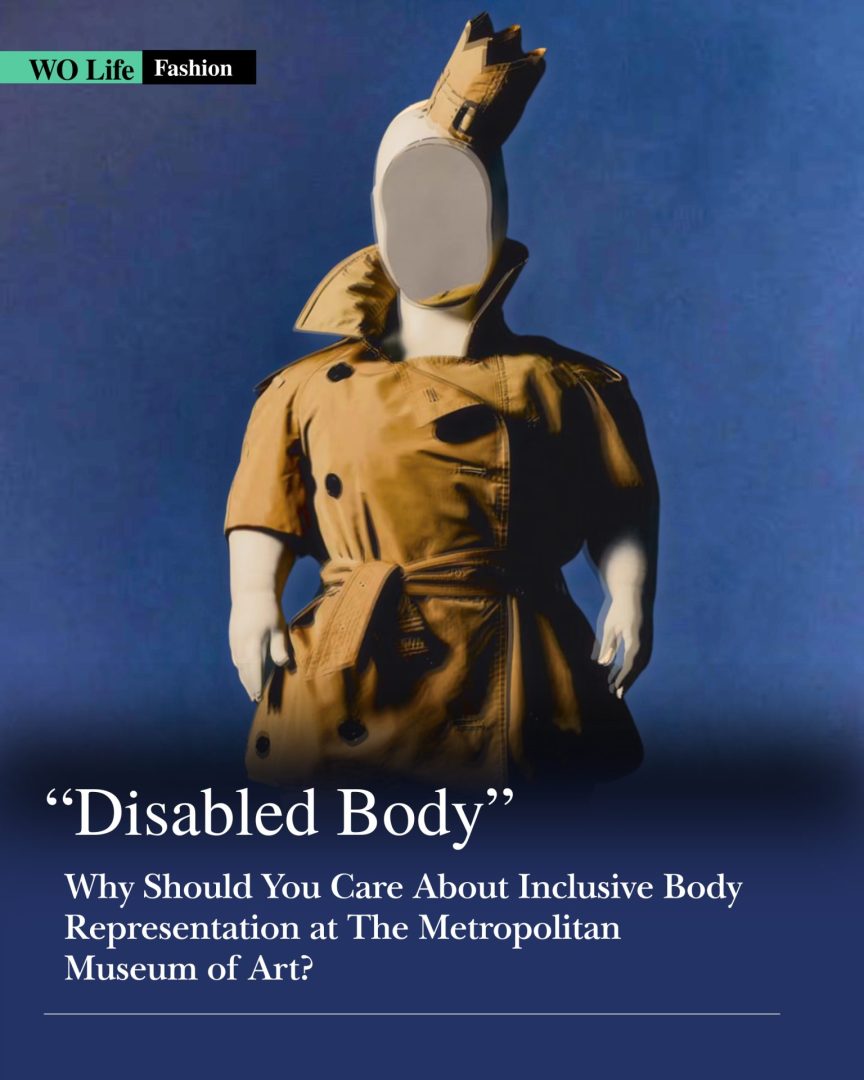
The Couture fashion exhibit named “Disabled Body” has now found a permanent home at the Metropolitan Museum of Art under the title of “Costume Art”. This collection serves as a significant step toward greater inclusion in the fashion realm. The museum showcases mannequins with mirrored faces modeled after real individuals with disabilities, including Aimee Mullins, who competed in the 1996 Atlanta Paralympic Games; Aariana Rose Philip, the Antiguian American model; and Sinéad Burke, a disability advocate well known for advocating inclusive design in fashion. These unique mannequins not only represent diversity but also allow individuals to see themselves and gain a new perspective.
Sinéad Burke has been instrumental in making the museum environment more accessible
Sinéad Burke has been instrumental in making the museum environment more accessible. Together with her team, she trained staff on disability rights and justice, enriching the tour experience for visitors. In the costume art section, other exhibits include “Pregnant Body,” which portrays motherhood through unique representations, and a showcase that celebrates the beauty of aging in the exhibit “Aging Body.” All of these exhibits, viewed through a couture lens, challenge conventional perceptions of the human body. These fashion categories have historically been overlooked, making this representation all the more essential.
These pieces go beyond simply being fashion items displayed in a museum; they spark a larger conversation that connects high fashion with the everyday clothing available in local retail stores. The thought-provoking elements within these artworks can inspire fashion designers to create more inclusive items that embody this essential representation.
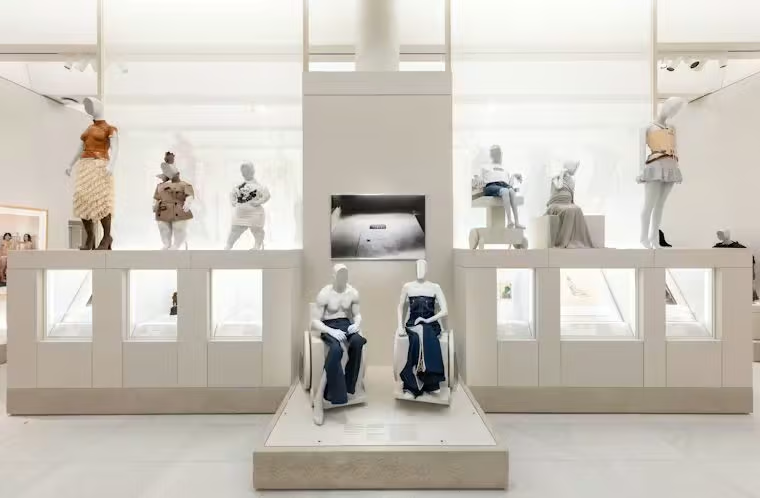
Photo © Anna – Marie Kellen / The Metropolitan Museum of Art
Key Takeaway:
I encourage you to contemplate the importance of inclusive representation in art at the Metropolitan Museum of Art. The displayed pieces invite you to look beyond your own perspective and reassess your perceptions. Even for those with disabilities, these artworks spark questions and evoke emotions through a wordless conversation: “What feelings does this art express?” “Why were these colors selected?” “What significance does the attire hold?”
Written by: JORDAN PASCHAL
To learn more about the Disabled Body and other body exhibits at The Metropolitan Museum of Art, visit The Met Museum